Dubai Taxi Company (DTC) reported a sharp decline in first-quarter profit for 2026 after regional disruptions in March significantly reduced airport activity, tourism flows, and transportation demand across the emirate.
The company announced that net profit fell 39% year-over-year to AED 50.7 million during Q1 2026, while revenue declined 6% to AED 551.1 million. EBITDA also dropped 22% to AED 120.7 million as demand weakened across core mobility operations.
March Became the Turning Point
According to the company, January and February had delivered relatively strong performance, with revenue growing 10% year-over-year and profitability remaining stable. However, the situation changed dramatically in March as regional geopolitical tensions disrupted tourism, airport traffic, and mobility patterns throughout Dubai.
Executives said the uncertainty led to:
- Lower tourist arrivals
- Reduced airport traffic
- Fewer taxi and limousine trips
- Increased remote work and remote learning activity
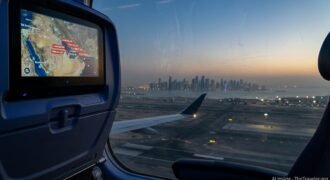
Dubai International Airport (DXB), one of the world’s busiest international hubs, experienced a severe traffic slowdown during March. Passenger traffic reportedly fell by more than 65% year-over-year amid regional airspace disruptions.
The collapse in airport demand directly affected DTC’s airport taxi and limousine operations, traditionally among its most profitable business segments.
Core Taxi Business Takes the Biggest Hit
DTC said its taxi segment generated AED 455.3 million in revenue during the quarter, down 12% from the same period last year. The decline was mainly linked to weaker trip volumes during March.
The limousine division also suffered, with revenue falling 15% to AED 29.2 million as airport activity slowed sharply.
Across taxi and limousine services, the company completed approximately 11 million trips during the quarter, representing a 14% decline year-over-year.
Interestingly, management noted that January and February alone accounted for roughly 8.5 million trips, suggesting most of the weakness was concentrated in March.
Delivery and Bus Segments Showed Resilience
Not all of DTC’s business units struggled during the quarter.
The company’s delivery bike segment continued to grow rapidly, with revenue increasing 61% year-over-year to AED 26.6 million.
Meanwhile, the bus segment posted a 7% increase in revenue to AED 33.7 million.
Analysts say these divisions may help DTC diversify away from its dependence on tourism-related taxi activity over the long term.
Fleet Expansion Continues Despite Weak Quarter
Despite the weaker results, DTC continued aggressively expanding its fleet and market share.
By the end of March 2026, the company operated 11,417 vehicles, up 16% year-over-year. Its taxi fleet alone reached 6,217 vehicles, including nearly 600 fully electric taxis.
After the quarter ended, DTC also acquired 600 additional taxi licence plates through Dubai’s Roads and Transport Authority (RTA), increasing its market share to approximately 47%.
The company plans to deploy the additional vehicles beginning in July 2026.
Digital Mobility Strategy Continues
DTC is also continuing its push into app-based transportation and digital mobility services.
The company’s partnership with ride-hailing platform Bolt helped support e-hailing growth during the quarter, with taxi and limousine e-hailing trips rising 9% year-over-year to around 5 million trips.
Dubai’s transport authorities are increasingly encouraging a transition toward digital ride-booking systems as part of the emirate’s broader smart mobility strategy.
The company also continues investing in:
- Electric vehicle adoption
- AI-powered fleet systems
- Autonomous mobility initiatives
- Digital booking infrastructure
Regional Instability Impacts Dubai Tourism
The results highlight how sensitive Dubai’s transportation sector remains to regional geopolitical instability.
During March 2026, several airlines adjusted routes and schedules after airspace disruptions across parts of the Middle East. Tourism-related industries including taxis, hotels, tours, and airport services all experienced sharp declines in activity.
Travel industry reports indicated significant booking cancellations during the escalation period, affecting both leisure and business travel into the UAE.
Long-Term Outlook Remains Positive
Despite the difficult quarter, DTC management maintained a relatively optimistic long-term outlook.
Dubai’s population growth, tourism expansion, and smart city initiatives continue supporting long-term demand for mobility services. Before the March disruption, DTC had reported record FY 2025 results, including revenue growth of 13% and total annual trips exceeding 53 million.
Industry observers believe the March slowdown may prove temporary if regional stability improves and tourism activity rebounds during the second half of 2026.
Still, the quarter demonstrated how closely Dubai’s transportation ecosystem remains tied to international travel demand and broader geopolitical conditions.